Purchases made through links on Drip & Tolerances may earn us an affiliate commission at no extra cost to you. Read our affiliate partnership and funding disclosure
How micro-mesh screens regulate dispersion, preserve portafilter headspace, and protect group heads from coffee oil migration.
A puck screen sits directly atop the leveled, tamped coffee bed before locking the portafilter into the group head. While once viewed as a niche barista tweak, it has become standard workflow equipment for manual and semi-automatic espresso setups. The screen addresses two core challenges in puck dynamics: uneven water impact from the shower screen and grounds migrating back into the three-way solenoid valve.
Water exiting a group dispersion block enters the chamber under 6 to 9 bars of pressure. Without an intermediary baffle, localized water jets can bore into the surface of the tamped coffee, initiating channels that dilute extraction yield and cause astringency. A micro-perforated screen breaks this stream into a gentle, uniform sheet of water across the entire bed surface while capturing coffee grounds that would otherwise adhere to the showerhead gasket upon pressure release.
Evaluating Thickness: Sintered Mesh vs. Thin Perforated Discs
Puck screens generally fall into two physical categories, each presenting distinct thermodynamic and headspace trade-offs:
- Classic Sintered Mesh (1.5–1.7 mm): Constructed from multi-layer woven wire diffusion meshes bonded under heat and pressure. They offer dense hydraulic resistance and pore ratings around 50–150 µm. However, their physical mass displaces 1 to 2 grams of basket volume, requiring a reduced coffee dose to prevent the screen from jamming against the group shower screw.
- Etched and Laser-Cut Plates (0.2–0.8 mm): Fabricated from ultra-thin stainless steel sheets with thousands of micro-apertures. These minimal profiles preserve standard basket headspace, heat up nearly instantly, and avoid trapping fine silt within internal wire layers.
Precision Thin-Profile Screens
Thin screens are ideal for home baristas who already dose their baskets near capacity and cannot spare 1.7 mm of vertical clearance without forcing coffee against the dispersion block.
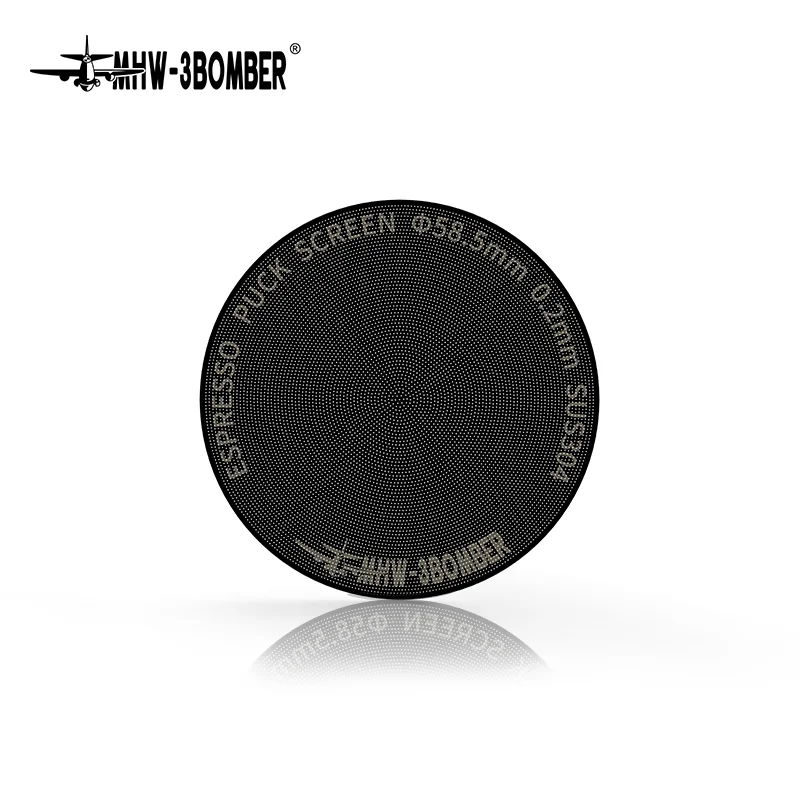
According to specifications reported by Vulcan Coffee Roastery, the MHW-3BOMBER design utilizes SUS304 stainless steel in a compact 0.8 mm thickness with an integrated 11,848-mesh hole array (approximately 0.18 mm filter hole diameters). This combination allows adequate water diffusion while preserving internal basket headspace better than traditional heavy sintered discs. The precision 58.5 mm sizing fits edge-to-edge in competition filter baskets like VST or IMS, eliminating the perimeter gaps where edge-channeling often begins.
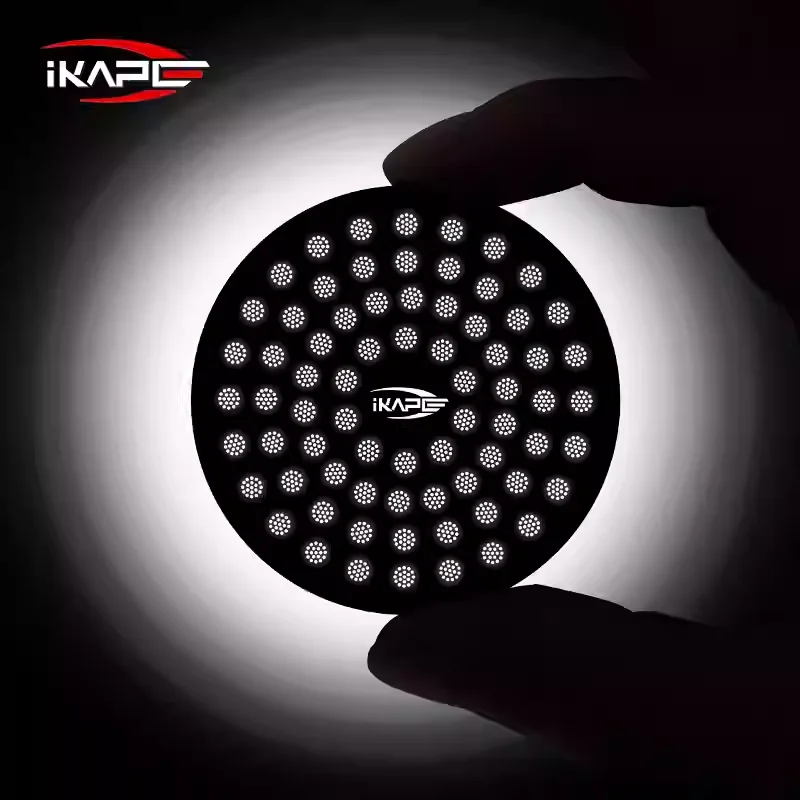
Alternative etched patterns, such as the IKAPE V2, utilize radial grouping or multi-stage micro-perforations designed to reduce surface tension before water contacts the coffee puck. These smooth-surfaced stamped plates offer an additional maintenance advantage: because they lack internal woven chambers, fines rinse off under a quick tap stream rather than embedding into a dense wire matrix.
Solving Extraction Workflow: Screen Handling & Removal
One recurring friction point when adopting puck screens is handling the hot metal disc after pulling a shot. When you knock the portafilter out into a knockbox, a heavy screen falls out with the spent grounds, requiring hot handling or digging through waste.
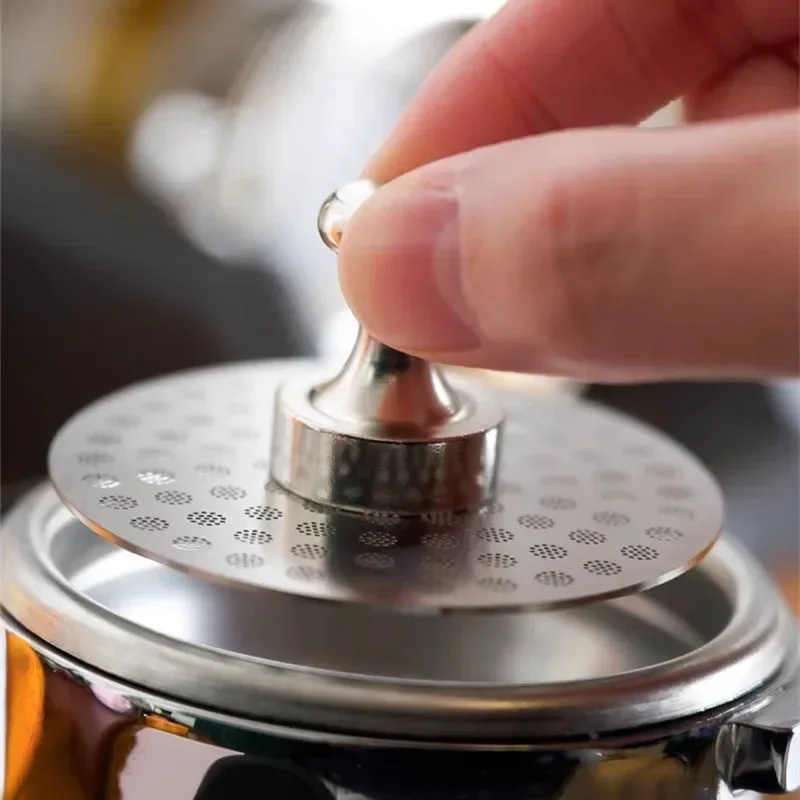
Kits featuring an integrated magnetic lifter allow you to pull the screen off the bed immediately after unclamping the portafilter, before knocking out the dry puck. This keeps your knockbox clean of accessories and allows you to rinse the screen immediately under the group head flush while the metal is still hot.
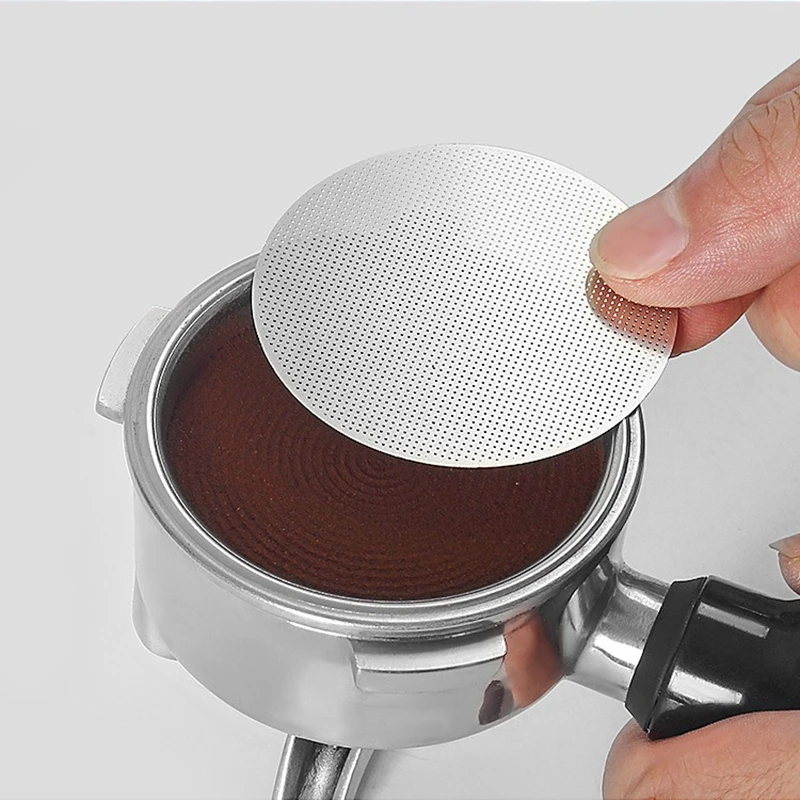
For budget-conscious baristas or standard backup setups, generic 304 stainless steel fine-mesh screens deliver identical group-head hygiene benefits. While unbranded screens may carry wider manufacturing variances in edge finish, their basic filtration function keeps the shower screen spotless across 51 mm, 54 mm, and 58 mm portafilters.
Sizing & Headspace Verification
Using the incorrect diameter or failing to measure basket headroom can damage your puck preparation or stress the portafilter ears:
| Nominal Size | Target Machine / Basket Types | Fit Consideration |
|---|---|---|
| 58.5 mm | Commercial 58 mm (E61, La Marzocco, Decent, IMS/VST baskets) | Tight wall-to-wall tolerance. Will not fit tapered or stamped OEM baskets. |
| 58.0 mm | Standard commercial 58 mm baskets with slight internal taper | Provides a small safety margin to prevent the screen from jamming. |
| 53.3–53.5 mm / 54 mm | Breville / Sage 54 mm portafilters (Barista Express, Bambino, Pro) | Breville baskets taper significantly at the base; tamp depth dictates screen fit. |
| 51.0 mm | De'Longhi Dedica, compact lever machines, generic budget espresso | Ensure non-pressurized baskets are used; pressurized floors cause flow instability. |
The Headspace Coin Test
To verify whether your dose accommodates a puck screen, tamp your dose and place a coin (such as an American nickel or 2-Euro coin, approx. 1.8–2 mm thick) on top of the dry coffee bed. Lock the portafilter into the group and immediately remove it without pulling a shot. If the coin leaves a deep impression, the shower screen screw is crushing into the bed. Reduce your dose by 0.5 to 1.5 grams to restore necessary expansion clearance.
Care, Cleaning, and Longevity
While puck screens keep your group head clean, they accumulate rancid coffee oils internally over repeated thermal cycles. A simple water rinse between shots removes loose particles, but deep cleaning is essential to maintain unimpeded hydraulic flow:
- Daily Flush: Rinse under hot tap water or blast with the group head flush immediately after decanting the puck.
- Weekly Chemical Soak: Submerge screens in hot water with espresso machine backflush detergent (such as sodium percarbonate/Cafiza) for 15–20 minutes. Rinse thoroughly to purge emulsified oils trapped inside micro-pores.
- Steam Wand Purge: For sintered multi-layer screens showing resistance anomalies, hold the screen with heat-safe tongs and blast steam directly through the mesh to clear stubborn micro-channel blockages.